
How nature affects the brain: what the science actually shows
Nature does not reboot the brain, but short exposures can favourably shift mood, self-reported stress and some attention-related processes. This article covers the firmer findings, the scientific uncertainties, and realistic practical options.
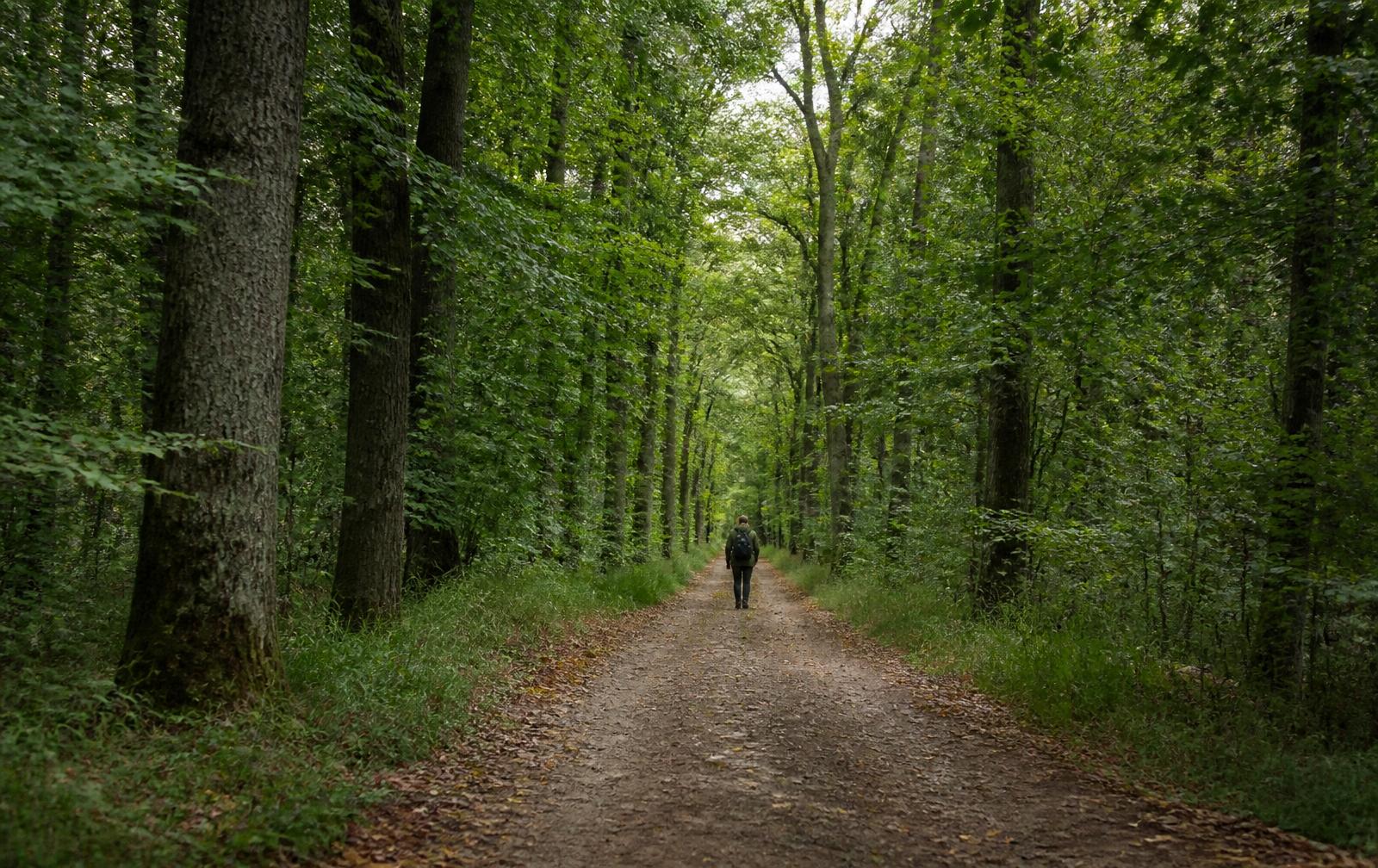
Nature does not automatically reboot, regenerate or "rewire" the brain. Research does suggest, however, that certain nature experiences can, in the short term, favourably affect mood, self-reported stress, and performance on some attention and working-memory tasks.
These effects are mostly small or moderate, and they do not appear in every person, environment or measure. A forest walk is also more than just vegetation. We move, we step away from work, we hear different sounds, we get fewer traffic-related stimuli, and perhaps we check our phone less often.
Nature's effect on the brain is therefore better understood not as a single mechanism, but as the joint result of several environmental, psychological and behavioural factors.
In short: after a brief nature exposure, several studies found better momentary mood, lower self-reported stress and small improvements on some attention or working-memory tasks. Physiological and neuroimaging results are more mixed. Nature is neither a treatment nor a universal "brain reset".
What exactly does 'nature's effect on the brain' mean?
In research, nature is not a single, uniform environment. A nature exposure can include a forest walk, a lunch break in an urban park, gardening, the sight of a lakeshore, greenery seen from a window, or even listening to natural sounds and looking at nature images.
These experiences are not necessarily equivalent. A real walk involves movement, spatial experience, smells, sounds, changing light and temperature. A forest image on a screen is a controllable research stimulus, but a much narrower experience.
The quality of the environment matters too. A quiet forest, a busy city park and a windy lakeshore differ in noise, air, temperature, crowding and sense of safety.
Two people can experience the same place very differently. Prior relationship with nature, physical condition, weather, allergies, familiarity with the area and fear of animals can all shape the experience. Nature is not universally restorative.
What do we know more firmly about nature's psychological effects?
The most consistent findings concern short-term changes in mood and self-reported stress. Some cognitive advantages are measurable too, but they are smaller and strongly task-dependent.
Mood and self-reported stress
In many studies, participants reported fewer negative feelings, lower momentary stress or better mood after a short time in a natural environment than after time in urban or artificial settings.
A meta-analysis on depressive mood found a small average favourable change. Bias risk in the studies was high, however, and the certainty of the evidence was low. The result therefore does not mean that nature treats depression.
Nature-based programmes often also involve movement, gardening, community participation or structured activity. It is hard to tell exactly how much of the change comes from the natural environment itself.
Time in nature does not replace needed psychological, psychiatric or medical care.
Attention control and working memory
Attention research examines, among other things, whether a natural environment improves the ability to filter distractions, sustain attention control, or hold information in working memory.
Working memory is the limited mental capacity used to hold and manipulate a small amount of information for a short time. It is needed, for example, when following a complex instruction or doing mental arithmetic.
A 2025 meta-analysis synthesised 273 cognitive outcomes from 80 studies. Nature exposure was associated on average with a small advantage over non-natural control conditions. Working memory and attention control showed more reliable differences, though results varied considerably between studies.
This does not mean that a forest walk suddenly leaves someone with substantially better memory or concentration. There is no adequate evidence for sustained improvement of long-term memory, learning ability or everyday forgetfulness.
A momentary shift or a lasting effect?
A large share of nature research examines short exposures. Participants walk, view nature images or spend some time in a park, and then immediately complete a questionnaire or a cognitive test.
These studies can show whether a momentary state changed after the experience. They say less about how long the difference lasts, whether it is noticeable in everyday functioning, or whether it becomes durable with regular repetition.
A short-term favourable change is therefore not the same as recovery or the treatment of a mental health problem.
Why nature can feel restorative
Several theories try to explain nature's psychological effects. The best known are Attention Restoration Theory, Stress Recovery Theory and the biophilia hypothesis.
These are useful interpretive frameworks, but none of them is a proven, universally valid mechanism.
Attention Restoration Theory
Attention Restoration Theory suggests that effortful, self-controlled attention can fatigue. We use this kind of attention when we concentrate for long periods, filter out distractions or switch frequently between tasks.
Natural environments, by contrast, often offer stimuli that gently hold our interest without demanding constant mental control. This is called "soft fascination": moving leaves, the surface of water, changing clouds, or a bird in flight.
The theory is compatible with several findings, but attention tests do not always show clear improvement. It is more accurate to say that nature can, in some situations, place less demand on directed attention — not that it "restores the brain".
Stress Recovery Theory
Stress Recovery Theory proposes that a natural environment perceived as pleasant and safe can elicit a fast emotional response. This may help tension or a negative emotional state ease after a demanding situation.
However, results for heart rate, blood pressure, heart-rate variability and other physiological measures are not fully consistent. It is therefore not accurate to claim that forests always "switch off the stress system".
Biophilia and other explanations
The biophilia hypothesis suggests that humans may have an evolutionarily rooted tendency to be drawn to living systems and certain natural environments.
This is a possible explanation, not a settled scientific fact. Our relationship to landscape is also shaped by culture, learning, childhood experience and a sense of safety.
Spending time in nature also changes several conditions at once. There may be less traffic noise, a break from work or screens, more movement, and a place with fewer tasks waiting for us.
The nature experience probably works through the combination of several such pathways.
How does nature relate to the stress system?
Stress cannot be captured by a single number or biomarker. Alongside self-report questionnaires, studies may measure heart rate, blood pressure, heart-rate variability, skin conductance and cortisol.
Results for self-reported stress and mood are generally more consistent than physiological measures.
What does cortisol tell us?
Cortisol is often called the stress hormone, yet it follows a natural daily rhythm and is involved in many physiological processes.
Levels are influenced by time of day, waking, meals, physical exertion, some medications and the sampling method.
A meta-analysis comparing forest and urban exposures found on average lower salivary cortisol in the forest-related studies. Protocols varied, and results typically came from short-term exposures.
The appropriate conclusion is not that nature reliably lowers cortisol. It is more accurate to say that, on average, some short forest exposures were followed by a favourable change, with considerable methodological uncertainty.
What do brain-imaging studies show?
Brain-imaging results are eye-catching, so they often get more media weight than they warrant on their own.
A change in a brain-activity or blood-flow signal does not automatically mean the brain is working better, regenerating, or being lastingly reshaped.
In a 2015 experiment, participants reported less rumination — repetitive negative thinking — after a 90-minute walk in nature. In parallel, researchers observed a change in a blood-flow signal in a related prefrontal region. The study used a small, healthy sample and a single exposure.
Another study with 63 healthy adults found different task-related amygdala responses after a one-hour walk in a forest versus in a city. Forest walks were followed by a decrease; urban walks left the response more stable.
The amygdala is not simply a "stress centre", and the study does not prove that a forest switches it off. Such results are interesting but should be treated as emerging evidence.
Memory, creativity and natural sounds
Claims about nature and memory often blur working memory with long-term memory. Current evidence supports at most a small, short-term working-memory advantage. General or lasting memory improvement has not been demonstrated.
For creativity, walking itself may matter. In controlled experiments, walking was associated with better performance on some divergent idea-generation tasks. It is unclear, however, how much of the benefit observed in nature comes from the environment, and how much from movement, the break from work, or the absence of screens.
Natural sounds can also shape the experience on their own. A 2021 review found that natural sounds were, on average, linked to more favourable mood- and stress-related outcomes than traffic noise or other control sounds.
This does not mean every bird or animal sound is calming. Volume, familiarity, personal memory and sense of safety all matter.
Why simply walking can help
Walking is at once movement, a change of environment and a mental break. It can support momentary mood, interrupt long sitting periods, and help with some creative tasks.
When we compare a natural walk with an urban walk, both groups move. The two routes are rarely truly identical, though. Traffic, noise, air quality, terrain, shade, crowding and perceived risk can differ.
A phone-free walk adds another factor. Part of the experience may come from the absence of interruptions and notifications.
In everyday life we do not have to decide whether nature alone or walking alone produces the effect. They are usually both present.
How much time should we spend in nature?
There is no proven, universally valid minimum "nature dose". Short exposures have also been linked to momentary changes in mood, stress experience or cognition, but the optimal duration is not known.
The often-cited 120 minutes per week comes from a study of 19,806 English respondents. Those who reported at least this much time in nature during the previous week were more likely to report good health and higher wellbeing.
The study was cross-sectional and based on self-report. It does not prove that exactly 120 minutes caused the difference, that 119 minutes would have no effect, or that everyone should aim for this amount.
A realistic conclusion is that even short occasions can be valuable, and that the experience is shaped not only by duration, but also by the quality of the environment, the activity and the individual's state.
The main limits of the research
Nature's effect is hard to study like a precisely dosed drug.
Many experiments involve a few dozen healthy young adults. Immediate post-testing is common, so little is known about how long effects last.
Participants also know whether they are in a forest or a city. Expectations about nature being beneficial can influence self-report answers.
Physical activity, breaks from work, social context, noise, air quality and temperature are further confounders.
Better mental health among people living in greener areas is not automatic proof of a direct brain effect. Greener neighbourhoods can also mean less noise exposure, more opportunities for movement, higher income or safer streets.
Nature is also not always pleasant. Allergies, ticks, heat, cold, slippery ground, darkness or fear of getting lost can reduce the restorative quality.
How to bring more nature into everyday life
The research does not point to a single mandatory programme or duration. What is sustainable is what is easily accessible, safe and pleasant.
A short walk in a nearby park, on a greener street or by water can also provide a change of environment. It is not necessary to travel to a forest every time.
Part of a lunch break can be spent outdoors. A nature experience does not have to involve movement: sitting quietly or observing can be a more accessible alternative for anyone who cannot or does not want to walk longer.
Natural sound recordings, images and videos are not necessarily a substitute for the real environment, but they can be a useful alternative in bad weather, time pressure or limited mobility.
Solo and shared walks can both be valuable. A shared walk offers social support; a solo walk offers quiet and greater autonomy.
For any outdoor activity it is worth considering the weather, appropriate clothing, hydration, sun protection, ticks and terrain difficulty.
A nature-based stay with realistic expectations
A nature-based place is not valuable because it is guaranteed to change the brain. It is valuable because it offers different conditions from the usual weekdays.
A quieter environment can reduce certain distractions, make room for walking and observation, and make it easier to interrupt continuous task-switching.
neti neti, near Zalaszentgrót in western Hungary, is not a therapy setting and not a wellness promise. It is a nature-based rural stay that can allow for a few slower days.
The houses are intentionally without internet; connectivity is available in the hütte. This is not complete isolation — it simply means that internet use is less automatically woven into every moment of the day.
Here too, the setting only offers the opportunity for walking, redirecting attention and rest. What each person experiences is personal and situation-dependent.
Summary
After a short nature exposure, momentary mood may on average improve, self-reported stress may fall, and a small advantage may appear on some attention or working-memory tasks.
Results for cortisol, autonomic activity and brain activation are more mixed. Claims that nature rewires the brain, switches off the stress centre or treats depression go beyond the current evidence.
The nature experience is not a single active ingredient. Movement, change of environment, natural sounds, less noise and fewer attentional interruptions can shape it together.
There is no need to look for the perfect place or an exact number of minutes. A short, safe and pleasant walk can be a realistic starting point.
Frequently asked
How does nature affect the brain?
After a short nature exposure, several studies found better momentary mood, lower self-reported stress and a small improvement on some attention or working-memory tasks. The effects do not appear in every person or on every measure.
Does nature improve attention?
Some studies found a small average advantage on attention control and working memory. Results are task-dependent and differ substantially between studies.
Does nature lower cortisol?
Some short forest exposures were followed by lower salivary cortisol. Results are sensitive to time of day, physical activity and measurement method, so it cannot be claimed that nature always lowers cortisol.
How much time should I spend in nature?
There is no proven, universally valid minimum. Short occasions have been linked to momentary changes, but the optimal duration depends on the environment, the activity and the individual.
What does '120 minutes a week in nature' mean?
The 120-minute figure comes from a large English observational study as a value associated with good health and wellbeing. It is not a medical threshold.
Does nature improve memory?
Small improvements may appear on some working-memory tasks. This is not the same as a lasting improvement in long-term memory or everyday forgetfulness.
Why can a forest feel calming?
Lower noise, natural sounds, pleasant scenery, movement, a change of environment and distance from everyday tasks can all play a role. The effect varies from person to person.
Selected sources
- Bell, C. N. et al. (2025): The relationship between nature exposures and attention restoration, as moderated by exposure duration: A systematic review and meta-analysis. DOI: 10.1016/j.jenvp.2025.102632
- Roberts, H. et al. (2019): The effect of short-term exposure to the natural environment on depressive mood: A systematic review and meta-analysis. DOI: 10.1016/j.envres.2019.108606
- Bratman, G. N. et al. (2015): Nature experience reduces rumination and subgenual prefrontal cortex activation. DOI: 10.1073/pnas.1510459112
- White, M. P. et al. (2019): Spending at least 120 minutes a week in nature is associated with good health and wellbeing. DOI: 10.1038/s41598-019-44097-3
- Buxton, R. T. et al. (2021): A synthesis of health benefits of natural sounds and their distribution in national parks. DOI: 10.1073/pnas.2013097118